
Subtotal: SGD$0.00
Knee Pain When Walking Upstairs: What It Means
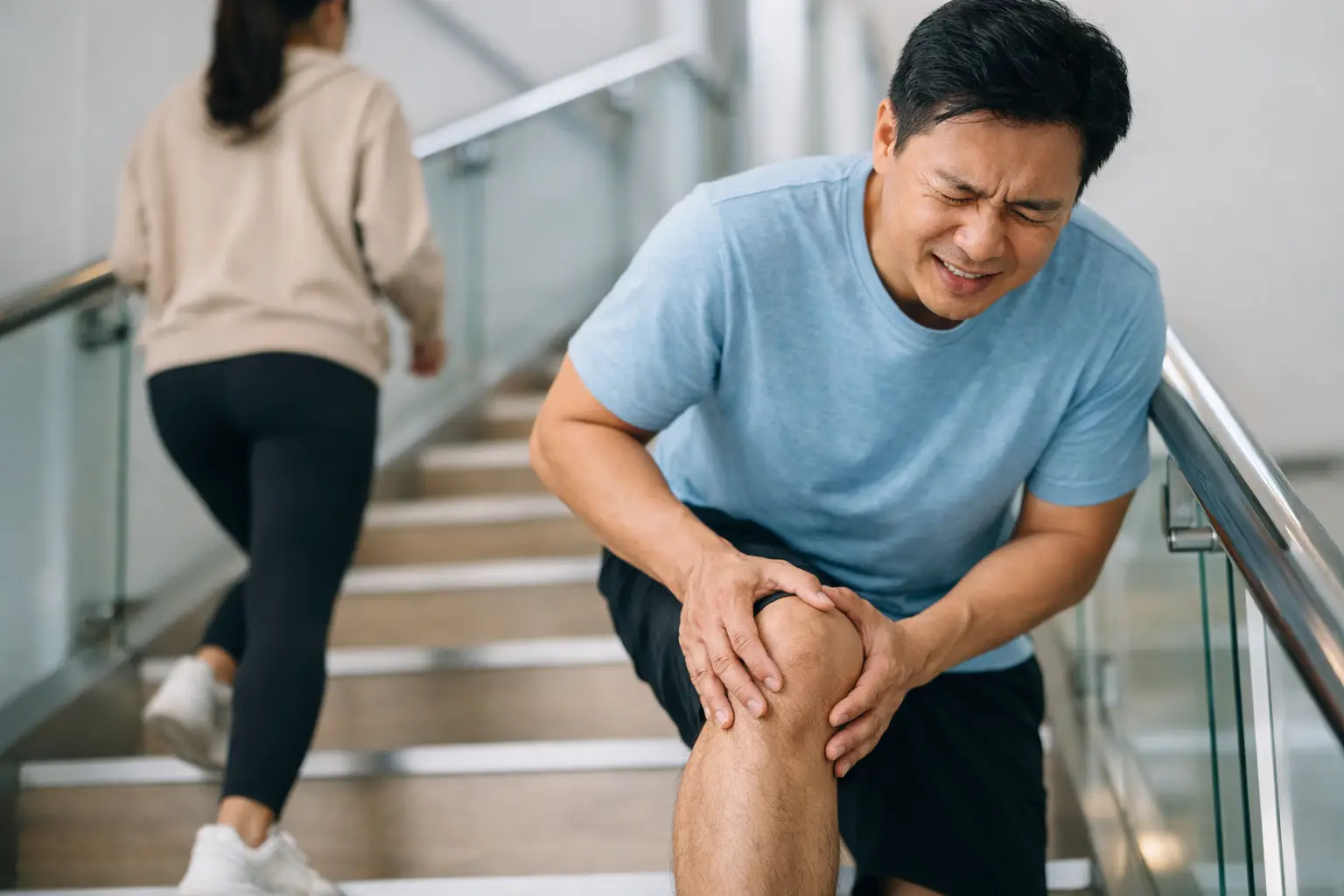
A lot of people ignore stair pain until the day they catch themselves gripping the handrail just to get upstairs. Knee pain when walking upstairs is not just an inconvenience. It is often one of the earliest signs that the joint is not tolerating load well, whether that comes from inflammation, cartilage wear, muscle weakness, overuse, or a tracking issue around the kneecap.
Stairs place more demand on the knee than level walking. Each step requires the joint to bend, stabilize body weight, and then generate force to lift you upward. If the tissues around the knee are irritated or worn down, stairs tend to expose the problem quickly. That is why many people can walk across a parking lot with only mild discomfort, yet feel a sharp ache or deep pressure the moment they start climbing.
Why knee pain when walking upstairs happens
The knee is asked to do several jobs at once on stairs. It has to flex, absorb force, stay aligned, and then push your body upward. That combination increases pressure inside the joint, especially behind the kneecap and in the areas where cartilage is already under stress.
For some people, the pain feels dull and aching. For others, it is sharp, catching, or accompanied by stiffness. The pattern matters. Pain in the front of the knee may suggest irritation around the kneecap. Pain along the inner or outer side can point to joint compartment strain, tendon stress, or early arthritic change. If swelling shows up as well, inflammation is usually part of the picture.
Age also changes the equation. In younger active adults, stair pain may come from overtraining, tendon irritation, or muscle imbalance. In middle-aged and older adults, the more common drivers are cartilage thinning, osteoarthritis, chronic inflammation, and a gradual loss of support from the muscles that protect the joint.
Common causes of knee pain when walking upstairs
One of the most common causes is patellofemoral pain, often described as pain around or behind the kneecap. This happens when the kneecap does not move as smoothly as it should in its groove, or when the tissues under load become irritated. Stairs are a classic trigger because they place extra compression on that area.
Osteoarthritis is another major reason. When cartilage begins to wear down, the knee loses some of its smooth cushioning. That can make loaded bending movements, especially stair climbing, feel painful and stiff. Many people notice this most after sitting for a while, first thing in the morning, or at the end of the day.
Tendon problems can also be involved. The quadriceps tendon above the kneecap and the patellar tendon below it help control and produce movement during stair use. If either becomes irritated from overuse or strain, going up stairs may cause a localized, sore, or burning discomfort.
Weak hips and thighs are often overlooked. When the surrounding muscles are not doing their share of the work, more stress lands on the knee itself. This is especially common in adults who have become less active because of pain, creating a frustrating cycle where weakness worsens the very problem that caused movement to decrease.
Sometimes the issue is inflammation after exercise or repetitive use. Sometimes it is excess body weight increasing force through an already sensitive joint. And sometimes it is a combination of several smaller problems rather than one dramatic injury.
What your symptoms may be telling you
If the pain is mainly in the front of the knee and worsens with stairs, squatting, or getting up from a chair, kneecap-related irritation is more likely. If the knee feels stiff, swollen, or grinds during movement, arthritis or cartilage wear becomes more likely. If the joint feels unstable, locks, or gives way, that deserves closer medical attention.
It also matters whether the pain came on gradually or after a specific event. A slow build over months points more toward wear, inflammation, or muscular imbalance. Sudden pain after twisting, stepping awkwardly, or sports activity raises concern for meniscus, ligament, or acute tendon injury.
There is no single symptom that tells the whole story. Still, stairs are a useful clue because they increase joint demand enough to reveal weaknesses that may stay hidden during easier movement.
What helps in the short term
If your knee pain is flaring, reducing irritation comes first. That does not mean total rest in every case. It means being strategic. Shorten stair use when possible, use the handrail, and avoid repeated deep bending that keeps aggravating the joint.
Ice may help if the knee feels hot, swollen, or freshly irritated. Gentle movement often helps if the main issue is stiffness. Some people respond well to supportive footwear because better shock absorption changes how force moves through the leg.
You may also need to modify exercise temporarily. High-impact training, repeated lunges, or deep squats can prolong symptoms when the knee is already inflamed. A short period of adjustment is often more effective than pushing through and creating a longer setback.
Pain relief matters, but so does the method. Many adults are trying to avoid relying too heavily on frequent NSAID use, especially if they have stomach sensitivity, blood pressure concerns, or need a longer-term strategy. That is where a carefully chosen joint support routine can be worth considering.
Supporting the joint beyond pain masking
When stair pain keeps returning, the goal should be to support the joint environment, not simply dull symptoms for a few hours. That means looking at inflammation, tissue stress, mobility, and ongoing wear. For many people, a quality joint supplement becomes part of that broader approach.
This is also where quality matters. The supplement market is crowded with underdosed formulas, generic blends, and products that look impressive on the label but offer little meaningful support. A more selective, clinically oriented formula is often the better choice for people dealing with recurring stiffness, age-related joint discomfort, or inflammatory flare-ups that affect daily movement.
Ingredients with anti-inflammatory and joint-support potential may help reduce the cycle of irritation that makes stairs so uncomfortable. The trade-off is that natural support is not usually instant. It tends to work best when used consistently and alongside practical changes such as strength work, better pacing, and weight management where appropriate.
For customers who want a more carefully screened option, TSC Health focuses on curated joint support rather than a warehouse of lookalike products. That approach tends to resonate with people who are tired of guessing and want something selected for quality, formulation standards, and real-world joint concerns.
When strength and mobility are the missing piece
Not every case of knee pain when walking upstairs is mainly an inflammation problem. In many people, especially after 40, it is partly a support problem. The glutes, quadriceps, and calves all help control how the knee tracks and absorbs force. If they are weak or deconditioned, stairs become harder on the joint.
Gentle strengthening can make a real difference, but the key is choosing movements the knee can tolerate. Straight-leg raises, seated leg extensions within a comfortable range, step-ups at a low height, and hip strengthening may help build support without excessive strain. Mobility work for the calves and hips can also improve how force is distributed.
This is where patience matters. If you load an irritated knee too aggressively, symptoms often spike. If you avoid movement completely, the joint may get stiffer and less supported. Most people do best in the middle – enough movement to restore function, not so much that it keeps provoking pain.
When to get the knee checked
Persistent symptoms should not be ignored. If pain lasts more than a few weeks, keeps getting worse, wakes you at night, or is paired with significant swelling, buckling, locking, or redness, it is time for a proper assessment. The same is true if you cannot bear weight comfortably or if the pain began after a clear injury.
A clinician can help determine whether the problem is mostly arthritic, mechanical, inflammatory, or injury-related. That matters because the right plan for kneecap irritation is not always the right plan for arthritis, tendon pain, or a meniscus issue.
The good news is that stair pain does not automatically mean severe joint damage. In many cases, it is an early warning sign – useful, uncomfortable, and very worth listening to. When you respond early with better support, smarter movement, and a longer-term strategy for inflammation and joint resilience, everyday tasks often become more manageable again.
If your knee has started negotiating every staircase before you do, take that seriously. Small changes made now can protect comfort, confidence, and independence later.


