
Subtotal: SGD$0.00
Hip Pain When Getting Up: What It Means
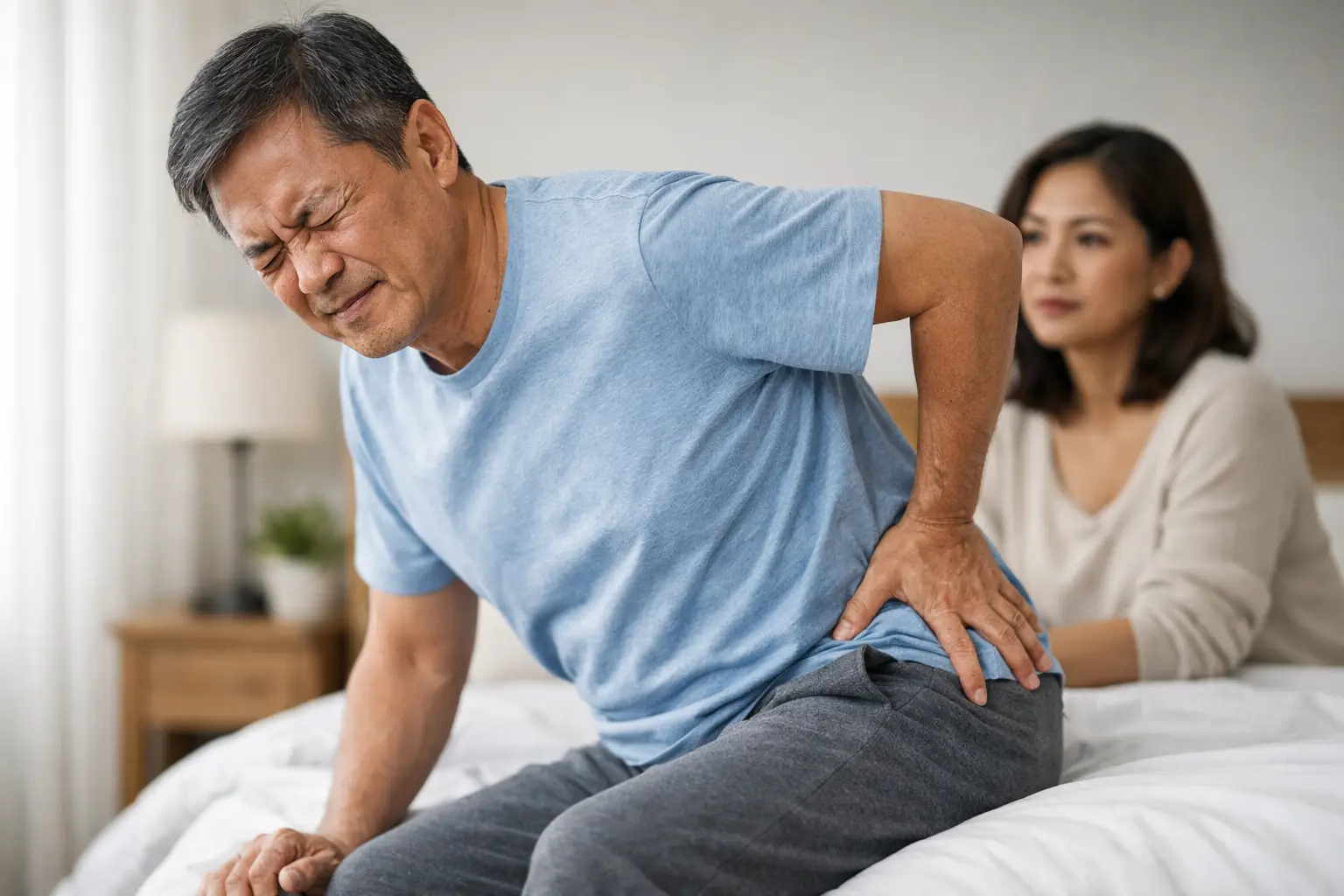
That first sharp catch in your hip when you rise from a chair can feel surprisingly intense. For many adults, hip pain when getting up is not just a minor annoyance. It is a daily warning sign that something in the joint, surrounding muscles, or connective tissue is under strain.
Sometimes the pain fades after a few steps. Sometimes it lingers and makes stairs, walking, or even turning in bed harder than it should be. Either way, the pattern matters. Pain that shows up specifically when standing after sitting or lying down often points to stiffness, inflammation, reduced joint cushioning, or weakness in the muscles that support the hip.
Why hip pain when getting up happens
The hip is a weight-bearing joint, so the transition from rest to movement puts immediate demand on it. When you have been sitting still, the joint and nearby tissues can stiffen. Blood flow is lower, muscles are less active, and inflamed structures may feel more noticeable the moment you load your body weight onto them.
That is why some people feel a deep ache in the groin, a pinch on the outer hip, or stiffness through the buttock when they first stand. The exact location of the pain can offer clues, although it does not replace a proper medical evaluation.
Aging can play a role, but age is not the only factor. Repetitive exercise, previous injuries, arthritis, excess strain from prolonged sitting, and weakness in the glutes or core can all contribute. In many cases, the problem is not one dramatic injury. It is a buildup of irritation over time.
Common causes of hip pain when getting up
One of the most common causes is osteoarthritis. This happens when the cartilage that cushions the hip joint wears down over time. People with hip arthritis often describe stiffness after sitting, pain with the first few steps, and reduced range of motion. The discomfort may improve a little once the joint warms up, then return after a busy day.
Bursitis is another frequent source of pain, especially on the outside of the hip. A bursa is a small fluid-filled sac that helps reduce friction. When it becomes irritated, standing up from a chair, climbing stairs, or lying on that side can hurt. The pain is often more tender and localized than the deeper ache of arthritis.
Tendon irritation can create a similar pattern. The tendons around the hip, especially those connected to the gluteal muscles or hip flexors, can become overloaded. This is common in active adults, people who sit for long stretches, and those whose movement patterns have changed because of knee pain, back pain, or weakness.
Hip flexor tightness can also be part of the picture. If you spend much of the day seated, the front of the hip may become shortened and stiff. When you stand, those tissues have to lengthen quickly, which can cause pulling, pinching, or a cramped feeling in the front of the hip.
Referred pain is another possibility. Not all hip pain starts in the hip. The low back, sacroiliac joint, and even nerve irritation can create pain that feels like it is coming from the hip when you stand. This is one reason self-diagnosis can be tricky.
The symptoms that matter most
The pain pattern often tells you more than the pain alone. If your hip hurts only for a few seconds when you stand, then eases as you walk, stiffness and early joint wear may be involved. If the pain is sharp and catches every time you rise, tendon irritation, impingement, or mechanical joint problems may be worth considering.
If the pain is on the outside of the hip and gets worse when lying on that side, bursitis or gluteal tendon issues become more likely. If it is deep in the groin, arthritis or hip joint irritation is more common. If you also notice numbness, tingling, or pain shooting down the leg, the source may be coming from the back rather than the hip itself.
What matters most is not guessing perfectly at home. It is noticing whether the problem is improving, staying the same, or gradually taking more of your mobility away.
What you can do at home first
If the pain is mild and recent, simple changes can help. Avoid dropping heavily into chairs and pushing up abruptly. Sit with both feet flat on the floor, lean forward slightly, and use your legs and arms together to rise more gradually. That reduces sudden stress on the joint.
Gentle movement is often better than complete rest. Short walks, light range-of-motion work, and careful stretching can reduce that stiff, locked-up feeling. For some people, heat before activity helps loosen the area. For others, especially if the hip feels warm or irritated after activity, ice may be more soothing.
Strength matters too. Weak glutes and core muscles can leave the hip doing more than its share. Over time, that changes how force moves through the joint. Targeted exercises can be very helpful, but they need to match the real issue. Stretching an already irritated tendon, for example, can sometimes make symptoms worse.
Weight management, if relevant, can also reduce pressure on the hip. Even moderate weight loss can lower the day-to-day load on joints. That does not mean pain is simply a weight issue. It means less force through an inflamed joint often improves comfort.
When inflammation is part of the problem
For many people, hip pain on standing is not just about mechanics. Inflammation is often part of the cycle. Irritated tissues become more sensitive, movement becomes guarded, surrounding muscles tighten, and pain starts showing up in routine transitions like getting out of bed or standing from the couch.
This is why some people look beyond short-term pain masking and focus on longer-term joint support. A carefully selected supplement may be useful when the goal is to support comfort, mobility, and the body’s normal inflammatory response over time. The key word is carefully. The supplement market is crowded, and not every formula deserves a place in a serious joint health routine.
That is where a more selective approach matters. TSC Health focuses on clinically oriented joint support rather than offering endless generic options, which is often the better path for people who want quality over noise. For adults dealing with stiffness, inflammation, and mobility decline, a well-formulated product with evidence-backed ingredients can make more sense than cycling through random blends with weak dosing.
When to get checked sooner
Some hip pain needs prompt medical attention. If you cannot bear weight, if the pain began after a fall, if the hip looks swollen or deformed, or if you have fever with severe joint pain, do not wait it out. Those situations call for medical evaluation.
You should also get assessed if the pain is steadily worsening, waking you at night, limiting your walking, or lasting more than a few weeks despite basic care. The same goes for pain paired with significant weakness, numbness, or loss of balance.
There is also an important middle ground. Maybe the pain is not an emergency, but it is changing how you live. You stop taking stairs one leg at a time. You avoid long outings. You brace yourself every time you stand. That is the point where support matters, because loss of confidence in movement can become its own problem.
A smarter way to think about relief
The goal is not just to get rid of one painful moment when standing up. The real goal is to protect movement across the whole day. That may include better chair mechanics, gentle strengthening, a more joint-friendly activity plan, weight reduction if needed, and natural support for inflammation and joint comfort.
It also helps to be realistic. If your hip pain comes from advanced arthritis, one stretch or one supplement is unlikely to fix everything. But many people do improve when they combine the right strategies consistently. Small gains matter. Less stiffness in the morning, smoother transitions from sitting to standing, and better walking tolerance can meaningfully improve independence.
If your hip has started talking back every time you get up, listen early. Pain during ordinary movements is often easier to manage before it becomes a constant companion. A thoughtful, selective plan now can help you keep doing the everyday things that make life feel like your own.


