
Subtotal: MYR0.00
Curcumin vs Glucosamine for Arthritis
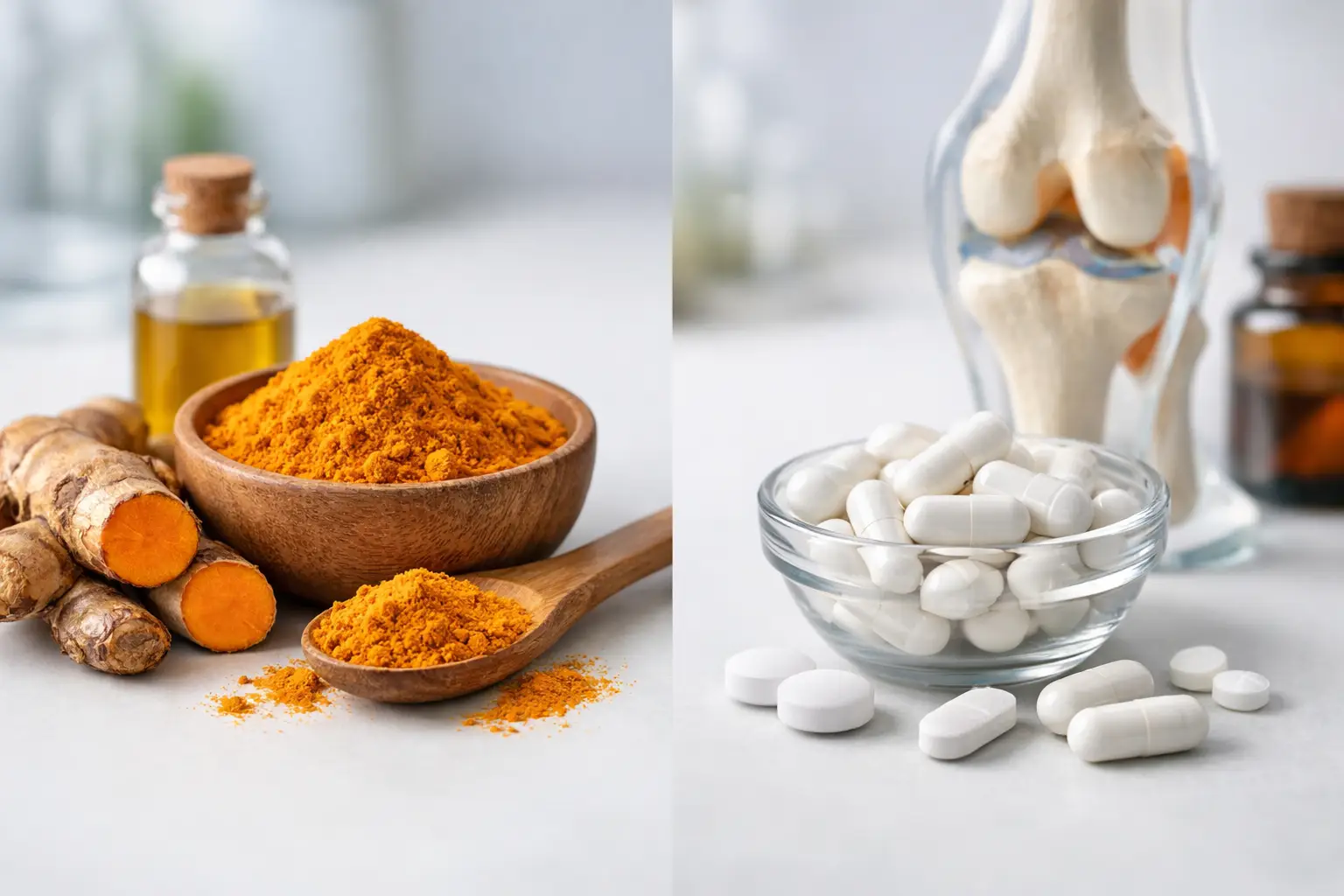
When your knees feel stiff getting out of bed or your hands ache after ordinary tasks, the question is not whether joint support matters. It is which kind of support makes sense for your body. In the curcumin vs glucosamine for arthritis discussion, the real difference comes down to what is driving your discomfort – inflammation, cartilage wear, or a mix of both.
Many people lump all joint supplements into one category, but they do not work the same way. Some are better suited to calming irritated joints. Others are aimed at supporting the structural tissues inside the joint over time. If you are trying to stay active, reduce daily stiffness, and avoid wasting money on low-quality formulas, understanding that difference matters.
Curcumin vs glucosamine for arthritis: the key difference
Curcumin and glucosamine are often compared because both are used for joint discomfort, but they take different paths.
Curcumin is the active compound in turmeric. People value it primarily for its anti-inflammatory effects. For people whose arthritis feels hot, swollen, stiff, or worse after activity, curcumin may be appealing because it targets the inflammatory side of the problem. That matters in both osteoarthritis and other inflammatory joint conditions, where irritation inside the joint contributes to pain and reduced movement.
Glucosamine is a natural compound that helps build cartilage structure. People often use it to support the cushioning tissues in joints, especially in osteoarthritis where wear and tear play a role. Rather than working mainly as an anti-inflammatory, glucosamine more often supports longer-term joint maintenance and structural support.
If you want the shortest possible answer: people usually choose curcumin for inflammation support, while they usually choose glucosamine for cartilage support.
Many people with arthritis have both issues, which is why the better choice is not always either-or.
How curcumin may help arthritic joints
Curcumin is most useful when inflammation is a clear part of the problem. That can show up as morning stiffness, soreness after walking, or joints that seem to flare after repeated use. Some people describe this as a deep, nagging ache with a sense of tightness around the joint.
What makes curcumin attractive is that it speaks directly to the inflammatory cascade behind that discomfort. For adults who want a natural option to support mobility without leaning only on painkillers, this can be a meaningful advantage. It is especially relevant for people who feel their symptoms vary from day to day depending on activity, weather, or flare-ups.
The catch is absorption. Standard turmeric powder is not the same thing as a well-formulated curcumin supplement. Curcumin on its own is not absorbed efficiently, so quality matters a great deal. This is one reason selective supplement screening is important. A weak formula may look impressive on a label but do very little in practice.
Choose curcumin if your arthritis causes noticeable stiffness, swelling, or inflammatory discomfort that makes movement harder than it should be.
How glucosamine may help arthritic joints
Glucosamine is usually discussed in the context of osteoarthritis, especially in weight-bearing joints like the knees. It is not a quick fix. People generally take it because they want to support joint structure over time, not because they expect immediate pain relief.
That distinction matters. If your joint discomfort feels more like grinding, wear, loss of cushioning, or progressive stiffness that has built up over years, glucosamine may sound more relevant. It is often used by adults who are thinking beyond today’s pain and focusing on preserving function for the long term.
Results can be mixed. Some people do well with glucosamine, while others notice little change. The type of arthritis, the severity of joint damage, and the quality and consistency of the product all shape the outcome. This ingredient also requires patience. If someone is hoping for quick relief, glucosamine alone may feel underwhelming.
Still, for age-related joint decline and cartilage-focused support, glucosamine remains a familiar and reasonable option.
Which works better for pain and stiffness?
This is where the curcumin vs glucosamine for arthritis comparison becomes practical.
If your priority is reducing inflammatory discomfort and improving day-to-day ease of movement, curcumin often makes more sense. It tends to align better with pain patterns driven by irritation and stiffness. People who feel worse after activity or who struggle with joints that seem angry and inflamed may lean in this direction.
If your priority is long-term joint support in osteoarthritis, especially when cartilage wear is part of the issue, glucosamine may be worth considering. It is more of a structural support ingredient than a fast comfort ingredient.
When curcumin may be the better choice
Choose curcumin if your symptoms center around inflammation. That includes joints that feel stiff in the morning, sore after movement, or tender during flare-ups. It may also be appealing if your goal is to support mobility naturally while reducing dependence on products that only mask discomfort.
It can also be a better fit for active adults. Exercise-related joint irritation does not always mean advanced arthritis. Sometimes it reflects inflammation from repetitive strain, impact, or overuse layered on top of age-related wear. In that situation, anti-inflammatory support may be more immediately relevant than cartilage-focused support alone.
The most important condition is quality. Curcumin is only as good as the delivery system and formulation behind it.
When glucosamine may be the better choice
Choose glucosamine if you want to support joint aging, cushioning, and long-term osteoarthritis care. Many adults choose it when they notice a gradual decline in comfort, flexibility, or resilience in joints that have handled years of use.
It may also make sense for someone who is less concerned about flare-type inflammation and more concerned about maintaining daily function over time. If stairs are becoming harder, knees feel less supported, or movement feels more creaky than inflamed, glucosamine may deserve a closer look.
That said, it is not ideal for everyone. Some people take it for months without meaningful benefit. Others respond better when glucosamine is part of a broader formula rather than the only active ingredient.
Why combination formulas often make more sense
Real joint discomfort is rarely one-dimensional. That is why highly selective joint supplements often combine ingredients rather than asking one compound to do everything.
A smarter joint formula may include anti-inflammatory support such as curcumin, along with ingredients aimed at mobility, tissue support, and daily comfort. This reflects how arthritis actually behaves in the real world. There can be inflammation, stiffness, reduced flexibility, post-exercise soreness, and age-related wear all at once.
For that reason, many people choose a clinically oriented formulation that prioritises quality, effective dosing, and practical usefulness instead of buying isolated ingredients one by one. At TSC Health, we take a selective approach because joint support should focus on effectiveness, not a crowded shelf of generic options.
A few important cautions
Natural does not always mean risk-free. Curcumin may not be appropriate for everyone, especially those on blood thinners or with certain gallbladder concerns. Glucosamine may require extra consideration for people with shellfish allergies, depending on the source, and anyone managing blood sugar issues should discuss supplement use with a healthcare professional.
This is also where expectations matter. Neither ingredient reverses advanced arthritis. Neither replaces medical care when pain is severe, joints are unstable, or swelling is persistent. Include supplements in a broader plan that supports comfort, movement, and quality of life.
So which should you choose?
If your arthritis feels inflamed, stiff, and reactive, curcumin may be the more relevant starting point. If your main concern is long-term cartilage support in osteoarthritis, glucosamine may be the more logical choice. If your symptoms include both inflammation and wear, a well-designed combination formula may offer the most complete support.
The best supplement is not the one with the loudest marketing.
The best choice matches how your joints actually feel. It uses ingredients with a clear purpose. It comes from a quality standard you can trust.
When the right support fits the real problem, movement becomes easier. Mornings feel less restrictive. Daily life starts to open up again.


